E.164 Phone Number Format Explained
A complete developer guide to the ITU E.164 international phone number standard, parsing rules, database normalization, and common formatting pitfalls.
Marcus Vance•
A complete developer guide to the ITU E.164 international phone number standard, parsing rules, database normalization, and common formatting pitfalls.
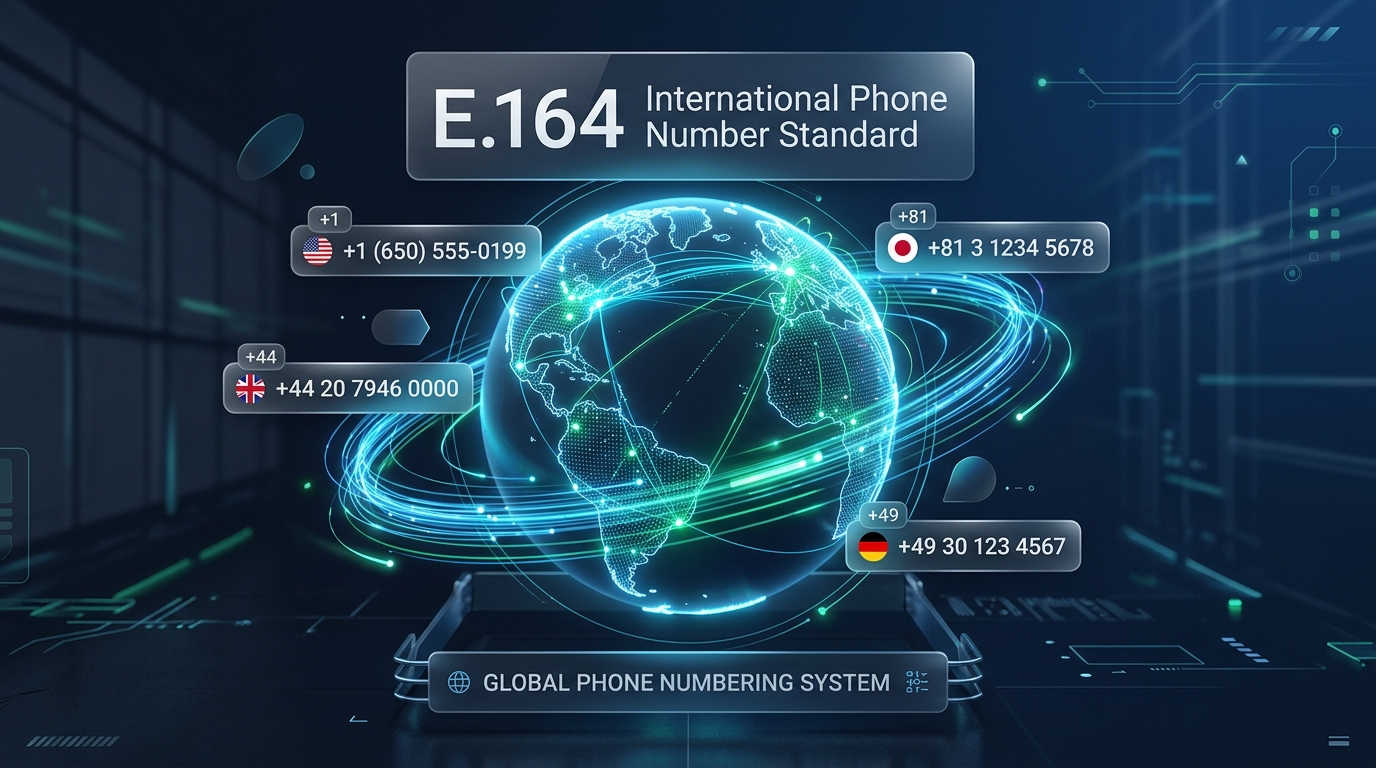
Getting phone number formatting wrong breaks apps fast. The E.164 format exists to fix that mess for good. This guide covers everything about the international phone number standard developers rely on daily, from its basic structure to the mistakes that trip up even experienced teams.
The E.164 format is a global phone number standard set by the ITU, the International Telecommunication Union. It defines how every telephone number should look worldwide, no matter the country you’re dialing from or to. This keeps systems consistent across borders and carriers.
Every E164 number follows the same shape: a plus sign, a country code, then the subscriber number. This global phone format removes guesswork from phone number parsing and storage. Without a shared standard like this, every country’s local dialing habits would clash, making cross-border apps a nightmare to build and maintain reliably.
An E.164 number has a strict limit of 15 digits total, including the country code. This phone number structure keeps things predictable across every numbering plan in the world, whether you’re pulling data from a US carrier or a telecom provider in Southeast Asia.
There’s no room for spaces, dashes, or parentheses in true E.164 output. That’s what makes it the preferred telecom format for phone number storage and phone API work. Most developers store this exact string in their database, then format it for display separately, keeping the raw data clean and machine readable at all times.
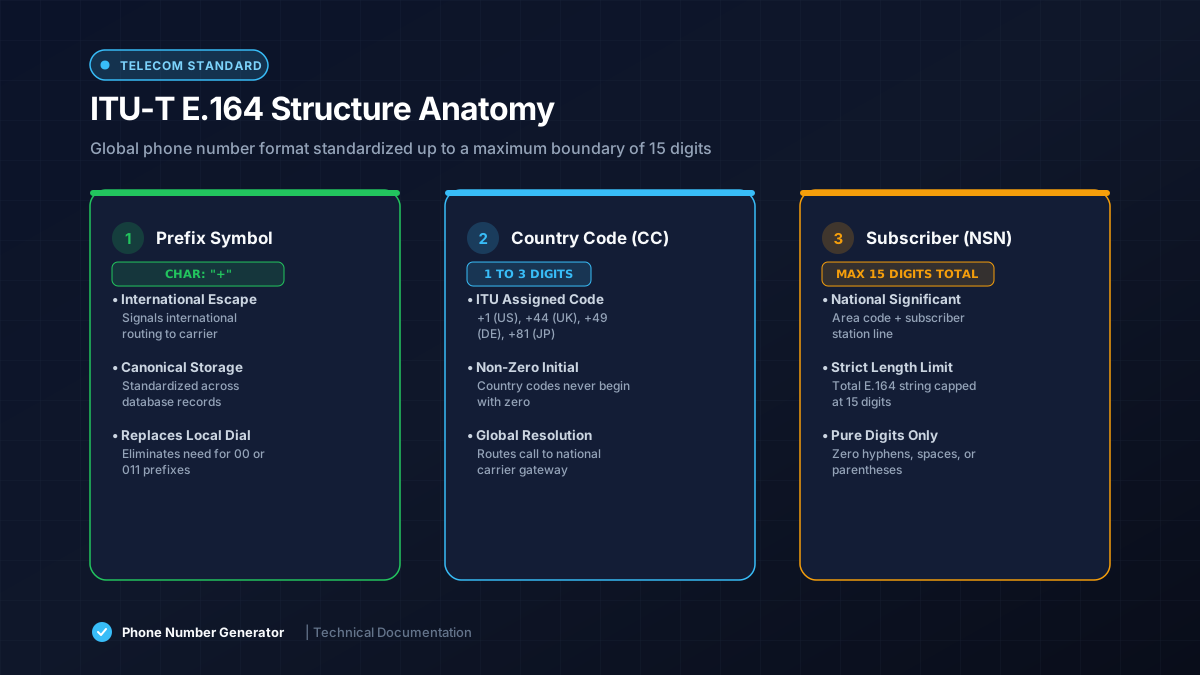
The plus sign signals an international prefix, telling systems this is a full international number format rather than a local dial string. Right after it comes the country code, like 1 for the US and Canada, or 44 for the United Kingdom.
This combination allows any system to identify where a number originates instantly, which is essential for accurate phone number normalization. Some countries share a single code, like the US and Canada both using 1, so parsing libraries also check the area code to route calls correctly.
Converting starts by stripping local formatting like dashes or leading zeros. Then you add the correct country code and plus sign. This process is central to good phone data standard practices, and it’s usually handled by a dedicated parsing library rather than manual string manipulation.
Here’s a simple example table:
| Local Format | E.164 Format |
|---|---|
| (555) 123-4567 | +15551234567 |
| 07911 123456 | +447911123456 |
| 0170 1234567 | +491701234567 |
Manual conversion works for small projects, but larger apps should rely on tested libraries. These handle edge cases like variable-length numbers or countries with unusual numbering plan rules automatically, saving hours of debugging later.
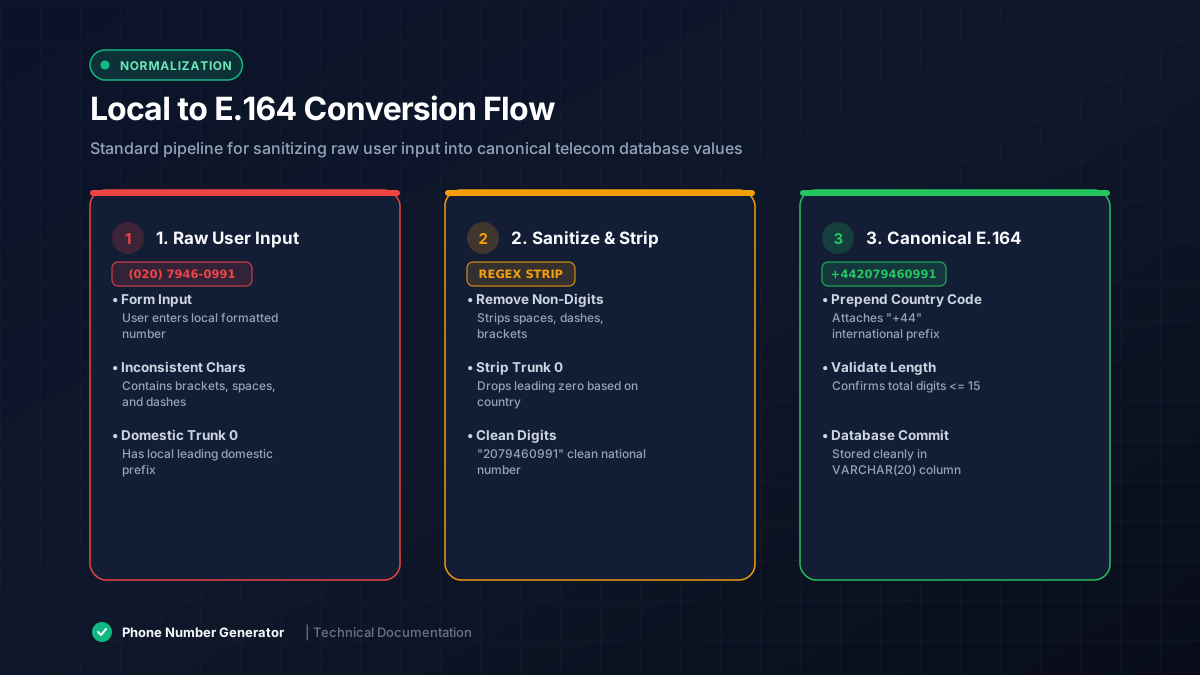
A national number only works within its own country. It often includes a trunk prefix or leading zero that isn’t needed internationally. E.164 removes these local quirks entirely, producing one universal string that works from any calling location.
This difference matters for global telephone standard compliance. Apps that only support national number formats often break when international users sign up, since the local formatting assumptions simply don’t translate across borders or telecom systems.
Most phone API services expect E.164 as the default input format. This makes international phone validation far easier to implement across different countries and carriers, since every request follows the same predictable pattern from the start.
Storing numbers in E.164 inside your database also simplifies searches later. A normalized phone number field avoids duplicate entries caused by formatting differences, like one user saved with dashes and another saved with spaces representing the same actual number.
Many countries use a leading zero for local dialing, but it gets dropped during E.164 conversion. This trips up developers who forget this rule during phone number parsing, especially when building forms that accept international input from multiple regions.
Handling this correctly prevents invalid numbers from slipping into your phone number storage system, especially for countries like the UK or Germany where the leading zero is standard for domestic calls but meaningless once the country code is added.
E.164 doesn’t care whether a number is mobile or landline. Both follow the same mobile number format shape once converted. This uniformity is part of the standard’s appeal, since it removes the need for separate handling logic based on number type.
That said, validation logic sometimes needs extra rules to tell them apart, since telephone numbering plans vary by number type within a country. Some regions assign distinct prefixes to mobile ranges, which developers can use to detect device type without extra lookups.
The biggest mistake is forgetting the plus sign entirely. Another common error is including spaces or dashes, which breaks strict E.164 validation checks in most systems and causes silent failures in downstream processing pipelines.
Developers also sometimes mix up country code placement, especially with countries that have multiple valid codes for different regions. Testing against a wide sample of international number format examples before launch catches most of these issues early.
The E.164 format solves formatting chaos across global apps. By following this phone number standard, developers get cleaner data, easier phone number normalization, and fewer bugs down the line. Adopting it early saves significant rework as your user base grows internationally.