How to Test Phone Number Validation
Comprehensive guide to testing phone number input fields, syntax validators, edge cases, special characters, and international length rules.
Elena Rostova•
Comprehensive guide to testing phone number input fields, syntax validators, edge cases, special characters, and international length rules.
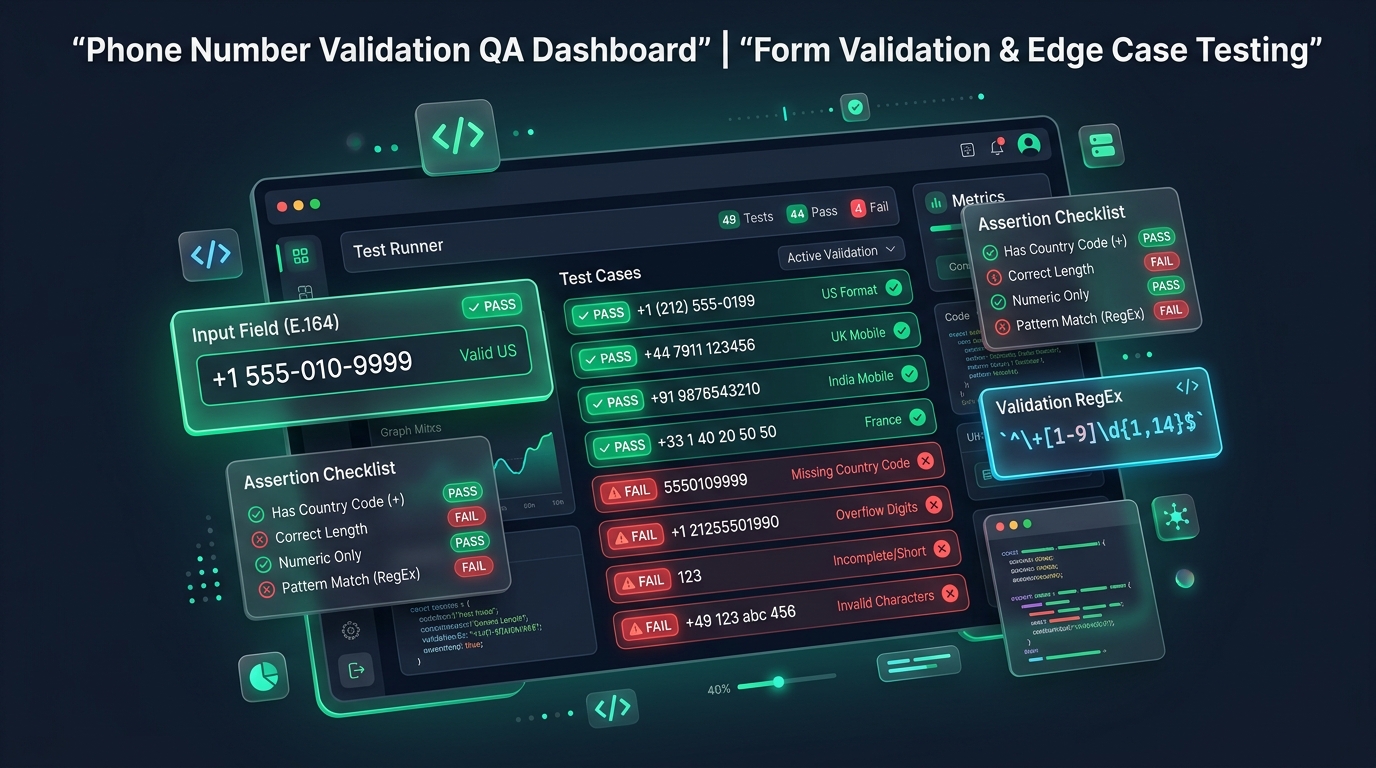
A broken phone field quietly costs businesses real signups. Thorough phone number validation testing catches these issues before real users ever hit them, and this guide covers exactly how to build that coverage.
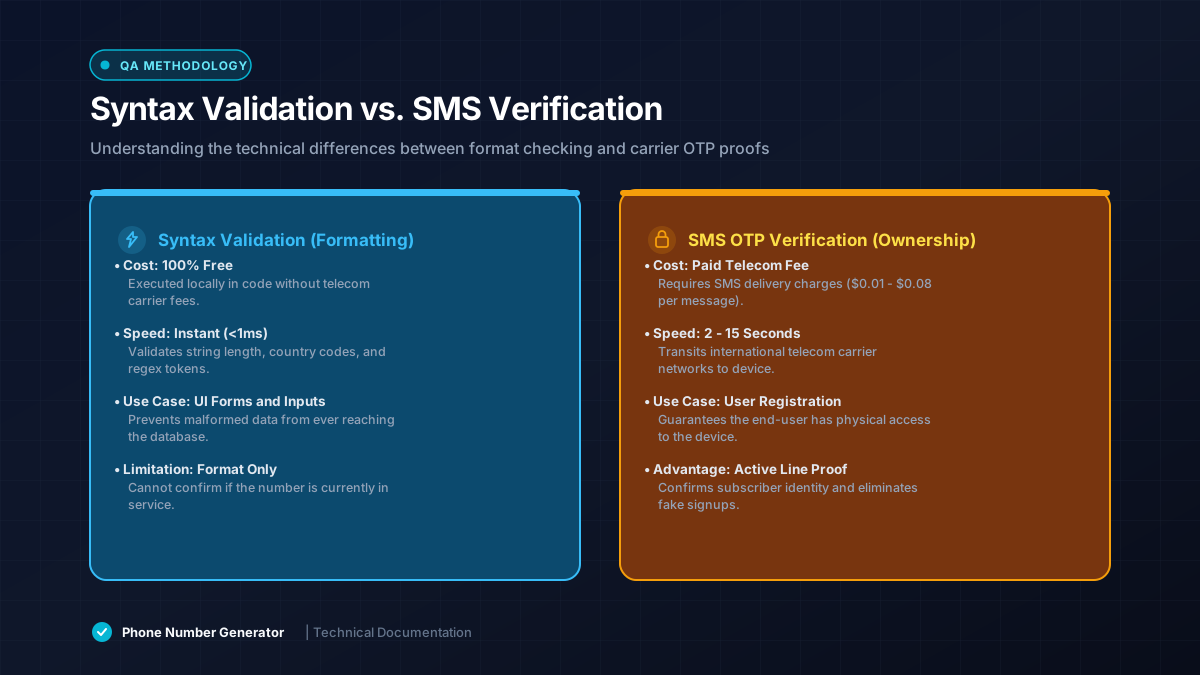
Phone number validation checks whether an entered number follows the correct structure and format for its country. It doesn’t confirm the number is real or reachable, just that it’s syntactically valid.
This distinction matters because phone validation testing focuses on format correctness, while a separate process called verification confirms the number actually works by sending a real code to it.
Syntax checks confirm digit count, valid characters, and correct country code placement. A good phone number validator rejects obviously malformed entries immediately, before any network request is ever made.
This early rejection saves resources and improves user experience, since catching a typo instantly is far better than waiting for a failed verification attempt several steps later in the flow.
Validation rules shift significantly based on country code validation logic. A number that’s valid in one country might fail entirely in another, since digit counts and prefixes vary by region’s numbering plan.
Testing across multiple countries ensures your phone input validation doesn’t accidentally block legitimate international users who don’t fit assumptions based only on your home market’s format.
A strong test suite includes both valid and invalid phone number examples. Testing only happy-path scenarios misses the bugs that actually frustrate real users during signup or checkout.
Build a list covering common real-world mistakes, like transposed digits, missing area codes, and extra spaces, then confirm your validator handles each case exactly as expected.
Users rarely type numbers in a clean, consistent format. Testing how your phone format validation handles spaces, hyphens, parentheses, and plus signs prevents unnecessary rejections of otherwise valid entries.
A table like this helps organize formatting test cases:
| Input | Expected Result |
|---|---|
| (555) 123-4567 | Valid |
| 555.123.4567 | Valid |
| 555_123_4567 | Invalid |
| 55512345678901 | Invalid, too long |
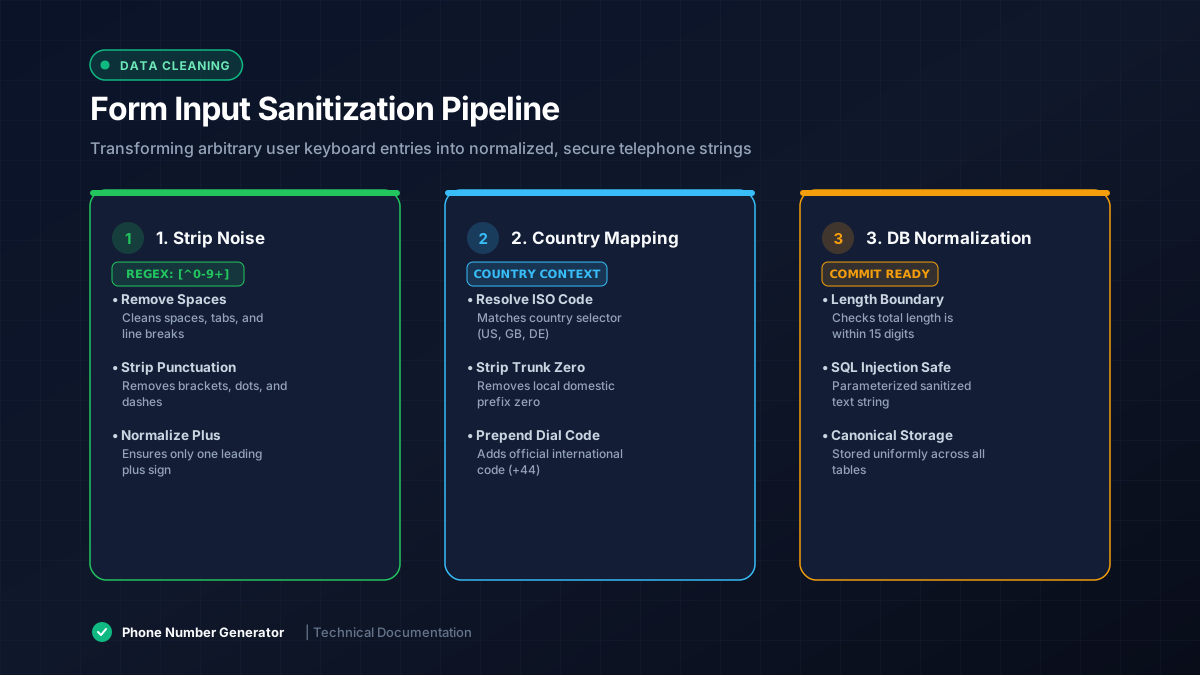
International validation needs test cases from multiple countries, since mobile number validation and landline validation rules aren’t uniform globally. A number valid in Germany might look completely wrong under US-only rules.
Pulling real, publicly available example numbers from several regions gives your phone number validator genuine coverage instead of relying only on synthetic guesses about international formats.
Edge cases like extremely short numbers, numbers with unusual country codes, or numbers containing letters need coverage too. These rarely occur in real traffic but can crash poorly written validators when they do appear.
Using reserved test ranges instead of real subscriber numbers keeps this process ethical and safe, following the same principle used throughout phone number testing more broadly across the industry.
Phone number validation confirms format. Verification confirms the number is real and reachable, usually through an SMS code. Confusing these two steps leads to either overly strict forms or false confidence in bad data.
A well-designed signup flow uses validation first to catch obvious errors, then verification second to confirm the number genuinely belongs to the person submitting it during account creation.
Automated validation suites should run on every code change, catching regressions before they reach production. Structure tests around clear categories: valid inputs, invalid inputs, formatting variants, and international edge cases.
Keeping this suite in version control alongside your codebase ensures input testing stays current as your app expands into new markets or adds new phone-related features over time.
Reliable phone number validation testing protects real users from frustrating signup failures. Covering valid inputs, invalid phone number cases, formatting quirks, and international edge cases builds a validator your team can genuinely trust in production.