The 555 Number Standard: How Fiction Uses Fake Phone Numbers Safely
Explore the history and purpose of the 555 telephone prefix in North American entertainment, film productions, and its impact on software QA testing.
Elena Rostova•
Explore the history and purpose of the 555 telephone prefix in North American entertainment, film productions, and its impact on software QA testing.
Ever notice every movie phone number starts with 555? That’s not an accident. This guide explains the 555 number convention, why it protects real people, and how it still influences software testing today.
The 555 number range is a set of digits reserved specifically for fictional use. It’s part of the broader North American Numbering Plan, known as NANP, which manages telephone numbering across the US and Canada under a shared administrative system.
This convention gives writers a safe, standardized way to include a fictional phone number without risking a real connection. It’s a small piece of telecom infrastructure that quietly shapes decades of film and television production.
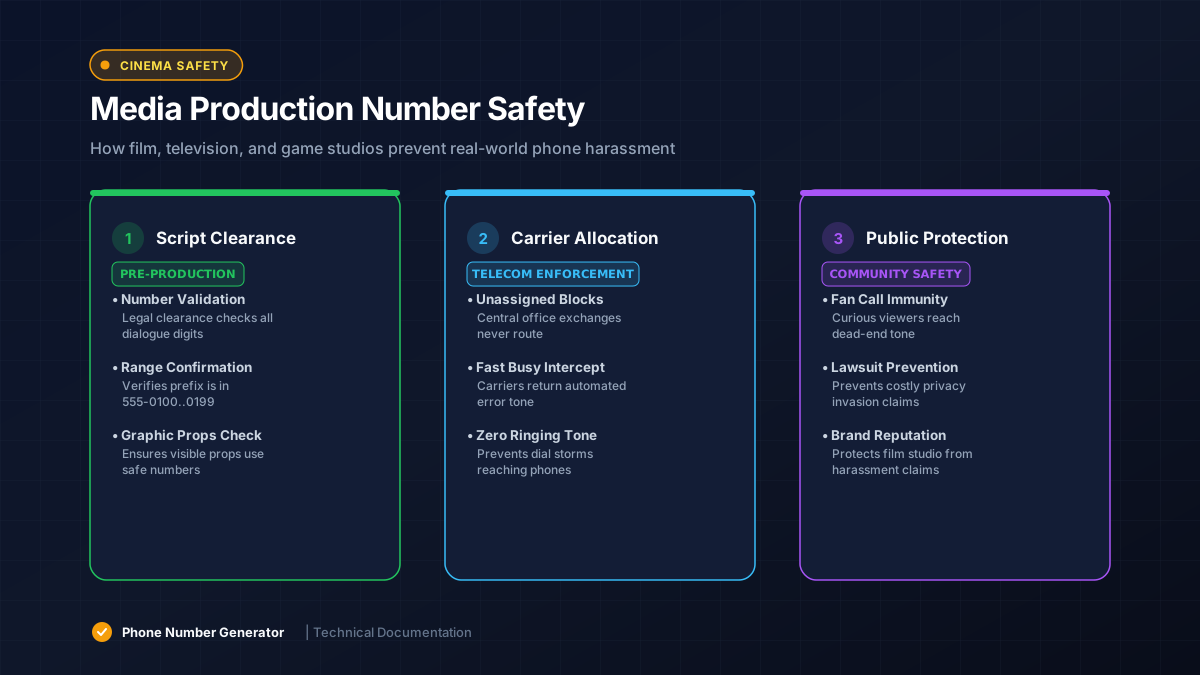
Studios use 555 numbers to avoid legal trouble and awkward phone calls. Before this convention became common, real numbers shown on screen sometimes got flooded with calls from curious fans trying to reach a character.
Now, movie phone numbers and television phone numbers consistently use this safe range, protecting both the public and the production companies. It’s become such a familiar pattern that audiences barely notice it anymore.
Because the range is officially reserved, these numbers won’t connect anywhere. This makes them perfect fictional contact information for scripts, ads, and props, since there’s zero risk of disturbing a real household.
Writers don’t need to worry about disturbing a real family when they use this safe telephone fiction convention, which is exactly why it has stuck around for so many decades in the entertainment industry.
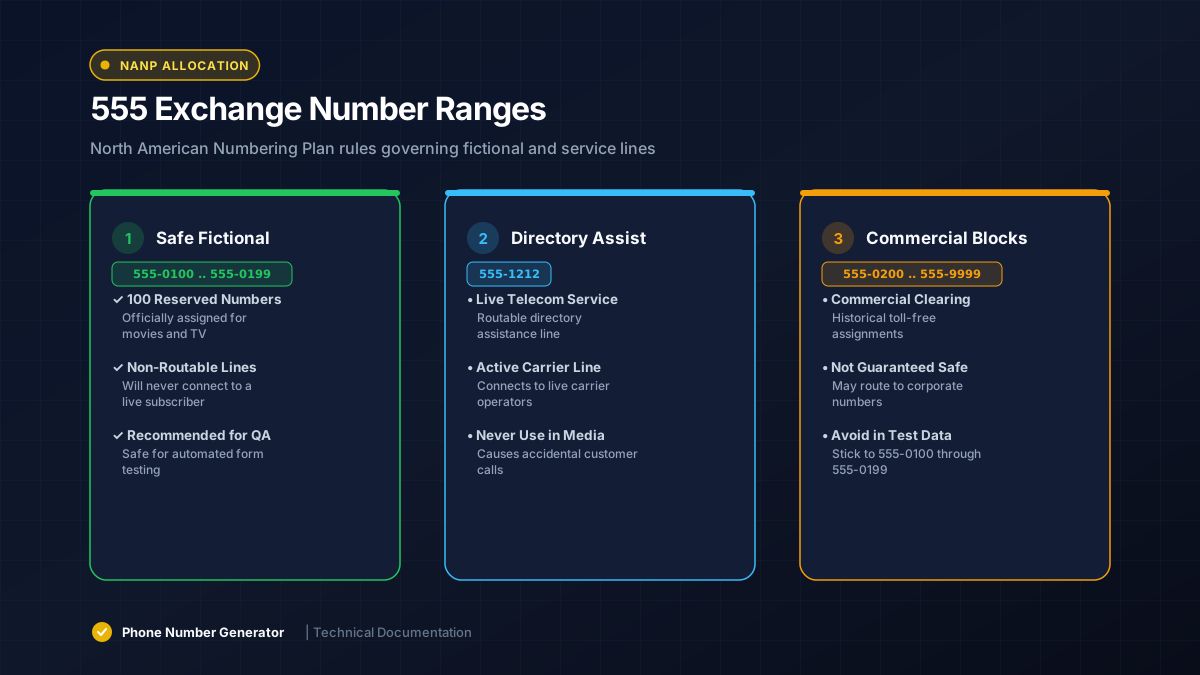
The block from 555-0100 to 555-0199 is specifically set aside for fiction and testing. Numbers outside this range may technically be assignable, so productions stick closely to this block to stay safe.
Here’s a quick reference:
| Range | Use |
|---|---|
| 555-0100 to 555-0199 | Placeholder number for fiction |
| Other 555 numbers | Sometimes assignable, avoid using |
| 555-1212 | Traditionally used for directory assistance |
Screenwriters and novelists use these numbers for realism without risk. A character can casually mention their example phone number, and audiences accept it without a second thought, since the format looks entirely normal on screen or on the page.
This small detail adds authenticity while keeping the fictional numbers completely harmless. It’s a subtle craft choice that experienced writers rarely think twice about, but it protects everyone involved in production.
A fake telephone number might just be randomly made up, while a reserved number is officially set aside by numbering authorities. The 555 block falls into the second category, giving it a guarantee that pure invention can’t match.
This distinction matters because pure randomness can accidentally collide with real numbers, unlike properly reserved ranges. Productions that skip this step take on unnecessary risk for what is usually a minor creative detail.
Phone number allocation systems track which blocks are active, reserved, or available at any given time. This number reservation process is what keeps fiction numbers from clashing with real subscriber lines across the entire numbering plan.
Without this system, media production would carry constant risk of contacting real people unintentionally. The allocation process is managed centrally, giving broadcasters and studios a predictable, trustworthy source of safe numbers to draw from.
Before the 555 standard became common practice, some productions used numbers that turned out to be active residential lines. This led to accidental calls flooding real households, sometimes for years after a film’s release.
That history is exactly why the entertainment industry now treats phone number safety as a serious production detail. Legal teams routinely check scripts for any number that isn’t drawn from the reserved fictional block before filming begins.
Developers should avoid confusing 555 numbers with proper software test numbers. While 555 works well for media and marketing mockups, it isn’t always ideal for automated phone number testing in apps, since testing often needs a much broader range of formats.
Understanding this difference helps teams choose the right fictional phone number examples for the right purpose. A test phone number generator built for software QA usually draws from dedicated testing ranges instead of the narrow fictional block.
The 555 number standard remains one of the simplest, most effective safety conventions in media production. By sticking to this reserved number block, writers and studios avoid real-world consequences while keeping their stories feeling authentic and grounded.